
Contract protection
Full worry free legal protection




Optimize your fleet ROI with our guide on skid steer land clearing. Learn how robotically welded Q355B steel attachments, skeleton rock grapples, and commercial snow pushers maximize site preparation efficiency while protecting your machinery.
In commercial land development and forestry management, project profitability is directly tied to hourly fleet production. Whether your crew is clearing dense brush for a new commercial subdivision or prepping topsoil for a large-scale municipal park, your skid steer or compact track loader (CTL) is only as efficient as the implement attached to its high-flow auxiliary couplers.
Experienced site contractors understand that selecting the improper tool doesn't just slow down daily yardage—it actively accelerates structural fatigue on the host machine. To bypass middleman markups and secure factory-direct pricing on heavily reinforced implements, fleet managers can explore the current inventory of specialized heavy-duty landscaping machinery engineered exclusively for severe industrial environments.
Land clearing exerts immense multidirectional torsional forces on attachment mounting plates and hydraulic cylinders. Standard attachments designed for light agricultural utility will rapidly buckle under these severe leverage demands.
When an operator attempts to pry up a deeply embedded tree stump or concrete footing, the entire weight and hydraulic breakout force of the skid steer are concentrated onto a localized area of the attachment. If the framework is constructed from low-grade carbon steel, this severe concentration of stress forces causes the main frame to twist, throwing hydraulic cylinders out of alignment and causing premature seal failure or rod bending.
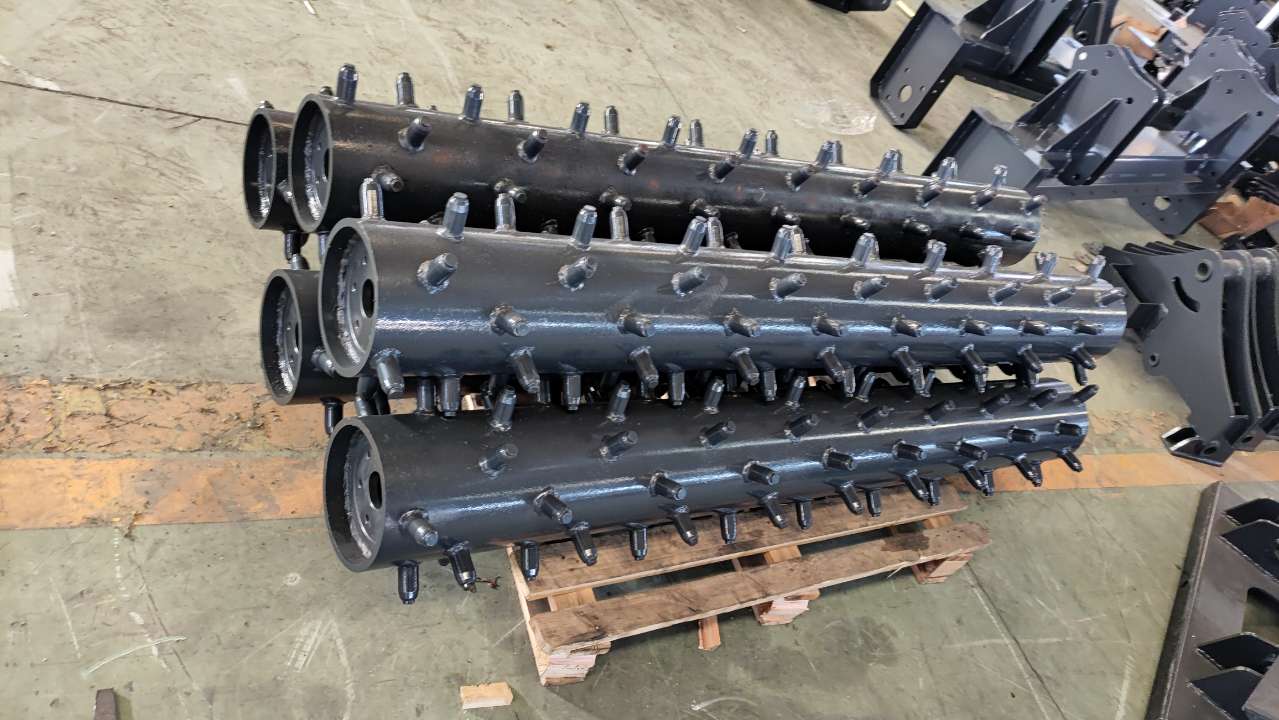
To withstand continuous structural leverage, premium industrial attachments utilize Q355B high-strength structural steel that undergoes precise robotic welding. Unlike manual welding, which can introduce microscopic air pockets and inconsistent penetration depths, automated robotic welding ensures 100% uniform bead distribution across all critical gussets and load-bearing channels. This creates a monolithic steel structure that evenly dissipates torsional stress across the entire universal mounting plate.
True operational efficiency means achieving maximum material separation and volume displacement per pass. Standard smooth-edge dirt buckets are fundamentally unsuited for high-production clearing cycles.
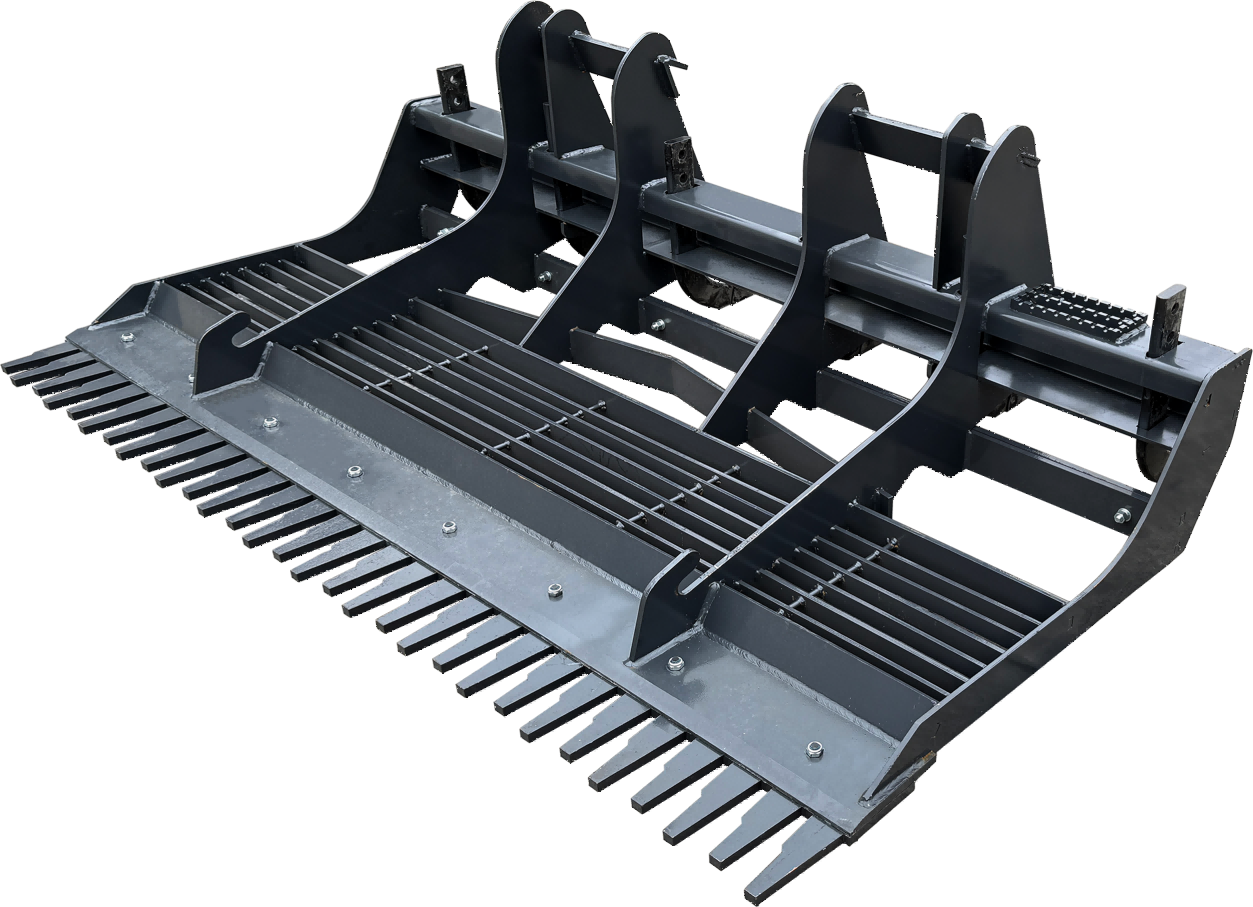
When clearing forestry overgrowth, carrying tons of unnecessary dirt to the dump site kills profit margins through excessive fuel consumption and inflated tipping fees. Industrial skeleton rock grapples solve this issue via precisely engineered tine spacing. As the dual independent hydraulic cylinders clamp down on irregular logs or heavy boulders, the operator can agitate the load, allowing clean topsoil to sift backward onto the grade while retaining only the high-volume debris in the bucket.
For seasonal fleet versatility, transitioning from land clearing to commercial snow removal requires equipment that handles massive weight displacement. Heavy-duty snow pushers utilize high-clearance, deep-profile moldboards to hold maximum snow volume without rolling overflow. Equipped with premium adjustable rubber edges, these units conform to surface irregularities, ensuring clean, efficient clearing power while shielding the machine from high-speed impact shocks against hidden obstacles.
Beyond steel fabrication, mechanical compatibility is the absolute cornerstone of attachment longevity and jobsite safety.
Never mount an active attachment without precisely cross-referencing your skid steer’s auxiliary hydraulic output. Running a high-flow attachment on a standard flow hydraulic system leads to severe component underperformance and slow cycle times. Conversely, forcing high-flow hydraulic output into an under-rated attachment motor causes extreme fluid shearing, rapid oil overheating, and can potentially trigger destructive cavitation inside the skid steer’s primary hydraulic pump.
To maintain absolute fleet flexibility, verify that every implement utilizes a universal quick-attach interface manufactured to SAE J2513 technical standards. This ensures that whether your operators are switching between a Caterpillar, John Deere, Bobcat, or Kubota loader, the mechanical locking pins line up perfectly every single time, minimizing changeover downtime and protecting ground crews from accidental detachment risks.